Buying a used Japanese engine can be a sensible option when your vehicle's original engine has suffered serious mechanical problems. But finding a replacement isn't always as straightforward as matching the make, model and engine size.
Two engines might look almost identical, yet have different sensors, mounting points or electrical connections. A replacement might also be described as low mileage without much explanation of its mechanical condition or history.
These are the details worth checking before committing to an engine.
Whether you own a Toyota Alphard, Nissan Elgrand, Honda Stepwagon or Mitsubishi Shogun, choosing the correct replacement can make the difference between a straightforward installation and a frustrating experience.
At Nippon Auto Spares, we've specialised in Japanese-import engines, gearboxes and genuine OEM components since 1995. We understand how important it is to identify the right engine and know exactly what you're buying.
Here's what to look for before purchasing a used Japanese engine.
1. Check the Engine Code and Compatibility
The first thing to establish is whether the replacement engine is suitable for your specific vehicle.
Japanese manufacturers regularly use different versions of the same engine family across multiple models and production years.
Take Honda's K-series engines, for example. Although the K20 and K24 share certain design characteristics, they differ in capacity and other specifications. That doesn't mean one can automatically replace the other.
The same applies to Toyota engines. A 2AZ-FE from one Toyota model may share its basic design with another 2AZ-FE, but differences in external components and vehicle specifications can affect installation.
Before choosing a replacement engine, check:
- The exact engine code
- Vehicle make, model and production year
- Chassis number or VIN
- Engine capacity and fuel type
- Transmission and drivetrain configuration
- Relevant Japanese-market and UK-market differences
Even if the engine code matches, certain components may need to be transferred from your existing engine.
If you're unsure where to find the information, our guide on how to find the correct engine code for your Japanese car explains what to look for.
It's always worth confirming compatibility before arranging an engine replacement rather than discovering a problem when the vehicle is already dismantled.
2. Understand Where the Engine Has Come From
One reason Japanese-import engines attract attention in the UK is the availability of used engines sourced from vehicles originally registered in Japan.
Japan has a well-established automotive recycling industry, and its vehicle inspection system, known as Shaken, can influence decisions about keeping older vehicles on the road.
However, an engine being imported from Japan doesn't automatically mean it's in excellent condition.
The engine's individual history, maintenance and mechanical condition are still important.
When dealing with a supplier, ask whether they specialise in Japanese engines and understand the vehicles those components come from.
A specialist should be able to discuss the engine's intended application, explain potential compatibility differences and identify any details that need checking before fitting.
Nippon Auto Spares sources genuine Japanese automotive components and has been supplying Japanese-import parts from its Derby base for over 30 years.
That specialist knowledge is particularly useful when sourcing engines for imported vehicles that aren't as commonly seen in UK workshops.
3. Don't Judge an Engine on Mileage Alone
Low mileage is often one of the first things buyers look for when considering a used Japanese engine.
Understandably, an engine that has covered fewer miles can seem more appealing than one removed from a heavily used vehicle.
But mileage doesn't tell the whole story.
An engine with relatively low mileage could still have suffered from poor maintenance, prolonged storage or overheating.
Equally, an engine with higher mileage may have been properly maintained throughout its working life.
The important thing is to consider mileage alongside the engine's overall condition.
Before purchasing, ask what mileage information is available and whether there is any supporting evidence.
Possible sources include vehicle records, recorded odometer readings or other documentation associated with the donor vehicle.
It's also worth remembering that an engine's advertised mileage doesn't confirm the condition of its internal components.
A low-mileage engine should still be assessed carefully.
If mileage cannot be verified, the supplier should be clear about that rather than presenting an estimate as a guaranteed figure.
4. Look for Signs of Damage or Poor Maintenance
You don't necessarily need to be a trained mechanic to recognise that some visible engine problems deserve further attention.
Even when buying remotely, asking for clear photographs and information about the engine's condition is worthwhile.
There are several areas to consider.
Oil Leaks
Oil around the rocker cover, sump or external seals can indicate worn gaskets or other issues.
A small amount of residue isn't necessarily evidence of serious engine damage, but substantial leakage should be investigated.
Corrosion
Surface corrosion can develop during normal use or storage.
However, heavy corrosion around important mounting points, fittings or other structural areas may create additional concerns during installation.
Cracks and Physical Damage
Visible cracks in the cylinder block or cylinder head are serious warning signs.
Damage to pulleys, threaded mounting holes or other components also needs to be assessed.
Evidence of Overheating
Signs such as coolant residue, damaged hoses or unusual discolouration may justify further investigation.
Of course, an engine can have internal problems without displaying obvious external damage.
That's why visual inspection should be considered alongside appropriate mechanical checks, rather than treated as proof of an engine's condition.
5. Find Out What Engine Testing Has Been Carried Out
Before buying a used Japanese engine, it's worth asking exactly what checks have been completed.
Different engines and suppliers may involve different inspection procedures.
These can include visual assessments, checking for obvious mechanical damage, examining fluid condition and conducting compression or leak-down testing where practical.
Compression Testing
A compression test measures the pressure produced inside each cylinder when the engine is cranked under suitable conditions.
Significant differences between cylinders can indicate internal wear or problems involving valves, piston rings or other components.
However, compression readings must be assessed against the correct manufacturer's specifications.
A good compression reading also doesn't guarantee that every component within an engine is in perfect condition.
Leak-Down Testing
A leak-down test checks how effectively a cylinder retains pressure.
It can help identify whether air is escaping through the intake valves, exhaust valves, piston rings or cooling system.
Not every used engine will have undergone every possible test.
What matters is understanding what has been checked, what the findings mean and whether additional inspection is recommended.
Nippon Auto Spares describes its engine sourcing and quality checks as an important part of its approach to supplying Japanese automotive components.
If you're considering a specific engine, speak to the team about the information and inspection details available for that unit.
6. Know What Is Included With the Replacement Engine
This is one area that can catch buyers out.
When someone talks about buying a replacement engine, they often picture a complete unit with all the accessories already attached.
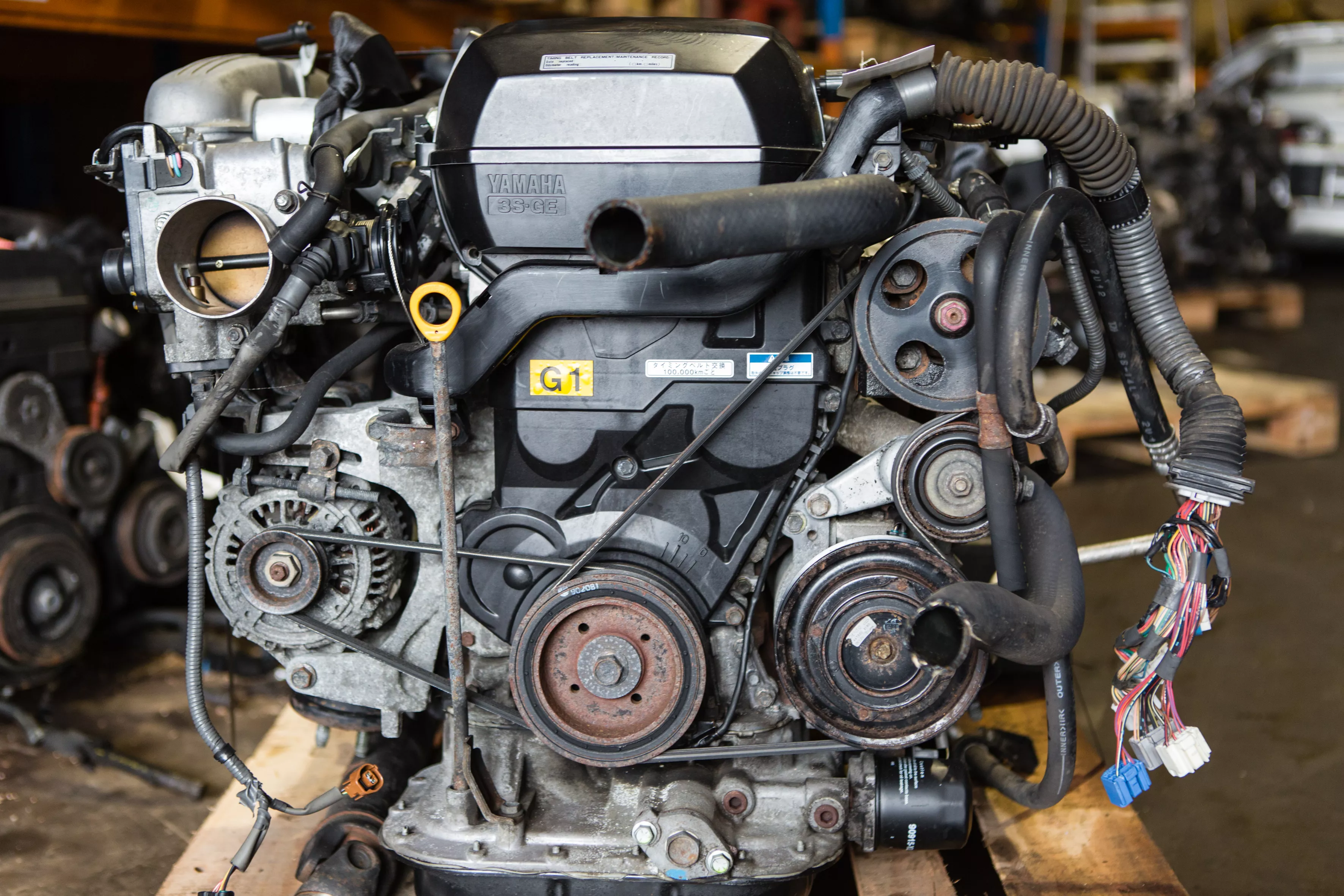
In reality, a used engine may be supplied as a bare engine, meaning certain external components are not included.
Depending on the vehicle, these might include the alternator, starter motor, wiring loom, manifolds, injectors, sensors or other accessories.
Nippon Auto Spares' engine warranty information explains that its used engines are supplied as bare units consisting of the cylinder block, cylinder head and internal components.
External accessories aren't covered as part of the guaranteed engine assembly.
This matters because some components from your original engine may need to be transferred to the replacement, provided they're compatible and suitable for reuse.
Before purchasing, confirm precisely what comes with the engine.
Don't assume that every component visible in a photograph is included or suitable for your installation.
A little preparation here can prevent delays once the work has started.
7. Read the Warranty and Fitting Requirements
Warranty information should never be treated as an afterthought.
Used engines are mechanical components with an existing history, so it's important to understand what protection applies and what responsibilities come with installation.
Some warranties cover specific internal components while excluding external accessories, seals and service items.
There may also be requirements about who installs the engine and what preparation must be carried out.
Nippon Auto Spares' published warranty conditions explain the importance of professional installation and include specific requirements relating to lubrication-system preparation and replacement service components.
These conditions are worth reviewing before arranging the work.
For example, depending on the engine and fitting requirements, items such as timing belts, oil filters, water pumps and other service components may need attention during installation.
If you're using an independent garage, make sure the mechanic understands the supplier's requirements.
You should also confirm how any warranty claim would be handled and what evidence may be needed.
The aim is to make sure everyone understands the fitting conditions before work begins.
8. Investigate Why Your Original Engine Failed
Suppose your original engine has suffered serious overheating.
You source a suitable replacement, arrange installation and get the vehicle running again.
But what happens if the overheating was caused by a faulty radiator, cooling fan or another component that hasn't been repaired?
The replacement engine could end up exposed to exactly the same problem.
That's why understanding the cause of the original failure is so important.
Before installation, the relevant surrounding systems should be inspected, particularly when the original fault involved overheating, oil starvation or contamination.
Depending on the vehicle, your mechanic may need to check the cooling system, lubrication system, intake components, electrical connections or accessories being transferred.
If you're still deciding whether replacement is necessary, our article on when to replace the engine in your Japanese vehicle explains some of the situations where replacement may be worth considering.
The important point is that installing another engine doesn't automatically resolve the underlying cause of the original failure.
9. Think About Engine Fitting Before You Buy
Finding the right engine is only part of the job.
Correct installation is just as important.
Modern Japanese engines can have complex electronic management systems, different sensor arrangements and specific mechanical servicing requirements.
Incorrect timing, poor lubrication or unsuitable components can create serious problems.
Having the engine fitted professionally allows the installation to be approached as a complete process rather than simply exchanging one unit for another.
A qualified technician can assess the relevant components, follow the correct fitting procedures and carry out appropriate checks before the vehicle returns to the road.
At Nippon Auto Spares, we offer a specialist engine fitting service at our Derby workshop.
For customers who would prefer assistance with both engine selection and installation, speaking to the team before purchasing can help clarify the options available.
10. Buy From a Supplier Who Understands Japanese Vehicles
There are plenty of places advertising used engines.
The important question is whether the supplier understands the particular engine you're looking for.
Japanese vehicles can present compatibility challenges, especially when dealing with imported models or engines that have several variations.
An experienced supplier should be able to discuss engine identification, sourcing, condition and what information is needed to establish suitability.
It's also worth checking that the business has clear contact details, accessible warranty terms and an established trading history.
Customer feedback can provide useful insight into communication, delivery and previous purchasing experiences.
At Nippon Auto Spares, we've been specialising in Japanese-import engines, gearboxes and automotive components since 1995.
We work with owners, mechanics and workshops looking for genuine replacement components for Japanese vehicles.
Our experience helps us understand why accurate engine identification and clear information matter so much before a replacement takes place.
Frequently Asked Questions
Are used Japanese engines reliable?
A properly assessed used Japanese engine can provide dependable service, but reliability depends on its individual condition, maintenance history and installation. Being imported from Japan alone doesn't guarantee its condition.
Can a Japanese engine fit a UK-specification car?
In some cases, yes. However, compatibility depends on the exact engine specification, electronics, mounting arrangements and vehicle configuration. An identical engine family isn't always enough to establish a direct fit.
Should I replace the timing belt on a used engine?
If the engine uses a timing belt and its service history is uncertain, replacement is generally sensible and may be required under the supplier's warranty conditions. Engines with timing chains need a different assessment.
Do I need professional engine fitting?
Professional fitting is strongly recommended. It also forms part of the published engine warranty requirements at Nippon Auto Spares.
Find the Right Used Japanese Engine With Nippon Auto Spares
Buying a used Japanese engine doesn't have to be complicated, but it does require a little research.
Checking compatibility, understanding the engine's condition, reviewing the warranty and planning the installation can help you make a more informed decision.
At Nippon Auto Spares, we've specialised in genuine Japanese-import engines, gearboxes and automotive parts since 1995. Based in Derby, we support customers throughout the UK and internationally.
If you're looking for a replacement engine or need advice about compatibility and fitting, we're here to help.
Contact Nippon Auto Spares or call 01332 293 399 to discuss your vehicle and engine requirements with our team